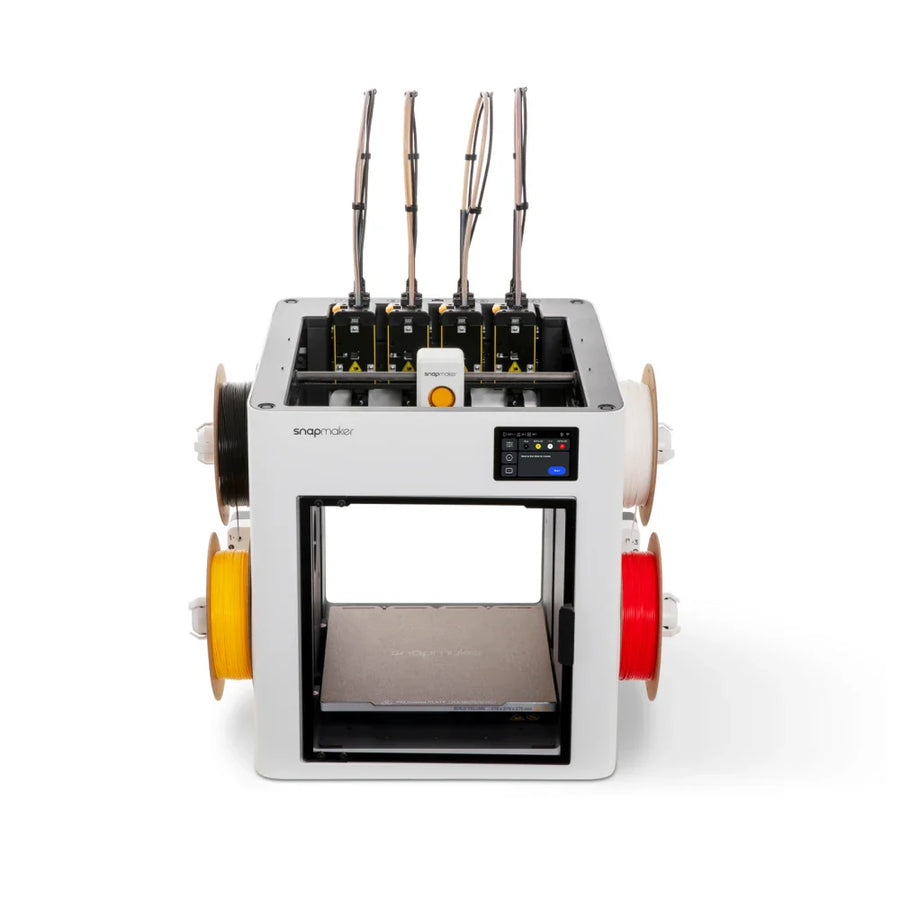
The evolution of the multi color 3D printer is heavily tied to the physics of motion. To achieve "500 mm/s Max Speed, Up to 20,000 mm/s² Acceleration", the structural integrity of the machine must be robust. High speeds generate significant inertial forces that can cause the frame to flex or resonate. Modern devices employ rigid aluminum extrusions and anti-resonance firmware to combat these forces. This ensures that even at maximum speed, the layers of your multi color 3D printer remain perfectly aligned, maintaining dimensional accuracy across the entire "270*270*270mm³ Build Volume".
Toolhead Synchronization
The claim that "4 Toolheads Work As One" is a testament to the sophistication of the control board and software. It requires precise synchronization of stepper motors and temperature controllers. When a multi color 3D printer is operating, the active toolhead must maintain perfect z-height alignment with the others. If one nozzle is slightly lower than the others, it will drag across the print. Therefore, the "SnapSwap™ 4-Toolhead System with 5s Tool Change" is accompanied by an auto-calibration routine that measures the exact offset of each nozzle to a fraction of a millimeter, ensuring seamless integration between colors and materials.
The Economy of Rapid Printing
"Smooth Printing with 5X More Speed and 5X Less Waste" is not just a marketing slogan; it changes the economic model of desktop production. In a commercial setting, time is money. A faster multi color 3D printer multi color 3D printer means more prototypes can be produced in a day, accelerating the design cycle. Coupled with reduced waste, the cost per part decreases substantially. This economic advantage makes "Multi-Color & Multi-Material Printing" accessible for small businesses that previously could not afford the high running costs associated with color-changing technology, allowing them to compete with larger manufacturing facilities.
Calibration and First Layer Success
The foundation of any successful print is the first layer, and this is where the "Auto Filament Loading" plays a surprising role. By ensuring consistent back-pressure in the nozzle from the start, the printer avoids under-extrusion. Combined with the high acceleration and speed capabilities, the multi color 3D printer can quickly prime the nozzle and lay down the first layer with precision. Without automation, the risk of a failed multi-color print is high due to the complexity of the setup. These automated features reduce the likelihood of filament snapping or jamming during the critical early stages.
Total System Integration
Ultimately, the performance of a multi color 3D printer is a result of total system integration. The print head, motion system, and electronics work in a closed-loop environment. When the printer reaches "500 mm/s Max Speed, Up to 20,000 mm/s² Acceleration", the cooling fans must also ramp up to solidify the plastic quickly. The "SnapSwap™ 4-Toolhead System with 5s Tool Change" ensures that the part cooling fan is optimally positioned for whatever tool is active. This level of integration ensures that the machine can handle the demands of printing large, complex objects at the maximum speed capacity of the "270*270*270mm³ Build Volume".